Friday, 8 January 2021

#BookReview — The Other Cipher: Soli Hansen Mysteries Book 2 by Heidi Eljarbo #HistoricalFiction #WW2 @HeidiEljarbo


Publication Date: 2 December 2020
Publisher: Independently Published
Page Length: 200 Pages
Genre: Historical Mystery

In the captivating second book of the Soli Hansen Mysteries, two women—separated by more than three hundred years—are connected through their love of art.

1613. Fabiola Ruber is been wed to a man she does not know and must live in a country with a new language and different customs. The memories of a lost love in her hometown Malta haunt her, and she sets out to find an artist who can do her portrait and recapture the feelings she had when she once modeled for a renowned Italian master painter.

1944. Four years into World War II, art historian Soli Hansen works with the Norwegian resistance to locate significant artwork and safeguard the pieces from the Nazis. When she finds out the Germans are after a hidden baroque depiction of a seventeenth century woman, she must muster all her courage and skills to decipher encrypted codes and preserve the mysterious art before it’s too late.

Both women are determined to do what they can to bring healing and redemption to their otherwise ominous future. Through tangled, bewildering clues and an eye for detail, Soli’s bond to Fabiola grows closer by the day. She must find the missing painting before the enemy does.

Ranging from a privileged life in seventeenth century Antwerp to Oslo during the German occupation of the second world war, this dual timeline is a historical mystery thriller that will keep you guessing until the very end.


"The Nazis have not stopped looting and stealing art, so we cannot quit doing what we can to preserve and protect precious objects. These items don’t belong to Hitler and the German Reich."

They plundered the cultural property of every nation they occupied. The National Gallery of Oslo, like the Louvre in France, had taken steps to hide their precious artefacts and priceless paintings. But there were many more still in private collections—private Jewish collections.

For art historian and proprietor of Holm’s Fine Art Shop, Soli Hansen is determined to stop some of these exquisite paintings falling into the enemy’s hands. When she hears that the Nazis are searching for a hidden baroque depiction of a seventeenth-century woman, she knows she must do everything in her power to find that painting before they do. But, to find the painting, she must first decipher an encrypted code, and that she cannot do without the help of the Resistance…

With a visceral understanding of the audience this story is intended for, Heidi Eljarbo has once again presented her readers with a book that has not only been meticulously researched but also one where the narrative is so utterly enthralling that I lost all sense of time. I was immersed in a world of espionage, where the heroes were ordinary people who found themselves in an unrecognisable dark world where the victors felt that it was their right to plunder the country for the spoils. Small the Resistance may be, but their hearts beat for their country, for their compatriots and for their common cause.

The readers are first introduced to Soli Hansen in Of Darkness and Light: A Soli Hansen Mystery Book 1. Soli is an art historian who, understandably, tries to stay under the radar of the occupying forces. It isn’t until her world, the ‘art world’, is threatened that she finds herself drawn into the dangerous underworld of the Resistance. The Other Cipher: Soli Hansen Mysteries Book 2 takes up where Book 1 left off, and once again the fate of a precious masterpiece, this time one painted by the famous Flemish Baroque artist, Peter Paul Rubens, is at stake. To discover the whereabouts of the painting, Soli must first decipher an encrypted code, which will reveal where the painting has been hidden by its Jewish owner just before the Nazis rounded up his family. I thought The Other Cipher: Soli Hansen Mysteries Book 2 was a gripping account of this era in history and it shines a light on the lengths the Resistance were prepared to go to and the risks they were willing to take to undermine and challenge the authority of the occupying forces. However, unlike many World War II novels where the Resistance is portrayed as a secret underground organisation that disrupts communication and aids the allied forces, this novel instead focuses on a small group of individuals who are determined to hide priceless works of art from the Nazis. And although there are hints of the lengths the Resistance are willing to go to save lives and to make things as difficult as they can for their enemies, this novel does not focus on such things, which I found rather refreshing. This is not the kind of story where you are going to need a box of tissues with you because there is simply no need for them. Eljarbo does depict the fear of discovery, but she also describes the excitement of the hunt, of solving the puzzle and finding the prize, which I thought made this book refreshingly good.

In this novel, Eljarbo explores the roles of women and children in the Resistance. Like Soli, I too was horrified at the notion that children were used to deliver newsletters and bulletins for the Resistance, especially when the punishment, if they were caught, was so severe. But, as this novel progresses, Eljarbo reminds her readers that this was a profoundly different time to the one we live in now, and that the spirit of a nation under the shadow of occupation beat not only in the hearts of young men but children, women and the elderly as well. This sense of nationality, of coming together, gave this story a somewhat hopeful feeling that if they all stick together, they would come through these dark days and know freedom once again.

Soli is a character that I have really come to care about. Her devotion, her love of art, and her determination to make sure it does not fall into the wrong hands make her very commendable. But she is also a woman who is trying to make sense of everything she has witnessed, and the things that she learns. Her deep friendship with Heddy and her growing attraction to Nikolai reminds the reader that Soli wants what everyone wants—to be accepted, and to love and be loved. I thought Soli’s depiction was absolutely fabulous and I am really enjoying watching this character grow and come into her own.

As I have already mentioned, the historical detailing has to be commended, and this novel is backed up by confident research. Eljarbo has certainly painted a crystalline portrait of a nation under occupation. She has also depicted the seemingly unbreakable spirit of its citizens. Alongside this, Eljarbo clearly demonstrates that she has an empathetic understanding of what being human is, and she portrays the two sides to human nature—the darkness and the light.

This story is told through two profoundly different timelines, and although most of the novel is based in the 1940s, Eljarbo does sweep her readers further back in time to the early 17th Century when Peter Paul Rubens picked up his brush and painted the picture that both the Nazis and the Resistance are looking for. I thought this dual-timeline worked well, and it helped the reader to understand the story behind the painting.

Although The Other Cipher: A Soli Hansen Mysteries Book 2 does stand firmly on its own two feet, I would recommend starting with Book 1 so that you learn the background of the characters you encounter in this novel.

If you are looking for a gentle introduction to World War II novels that focus on the Resistance, then I think that A Soli Hansen Mysteries would be a fabulous series to start with. I, for one, am looking forward to reading the next book in this beguiling series.

I Highly Recommend.


Heidi Eljarbo


Heidi Eljarbo is the bestselling author of historical fiction and mysteries filled with courageous and good characters that are easy to love and others you don't want to go near.

Heidi grew up in a home filled with books and artwork and she never truly imagined she would do anything other than write and paint. She studied art, languages, and history, all of which have come in handy when working as an author, magazine journalist, and painter.

After living in Canada, six US states, Japan, Switzerland, and Austria, Heidi now calls Norway home. She and her husband have a total of nine children, thirteen grandchildren--so far--in addition to a bouncy Wheaten Terrier.

Their favorite retreat is a mountain cabin, where they hike in the summertime and ski the vast, white terrain during winter.

Heidi's favorites are family, God's beautiful nature, and the word whimsical.

Connect with Heidi:


Tuesday, 1 December 2020

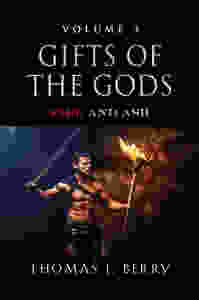
Check out an excerpt from Fire and Ash: Gifts of the Gods, Book 3 by Thomas J Berry HistoricalFiction #AncientGreek @TBerryAuthor @maryanneyarde


Fire and Ash
Gifts of the Gods, Book 3
By Thomas J Berry


Publication Date: 10th October 2020
Publisher: BookLocker 
Page Length: 450 Pages
Genre: Historical Fiction 

Five men and women in Ancient Greece are set on a dangerous journey of self-discovery during the bitter conflict of the Peloponnesian War.

While mighty Athens struggles to rebuild after a devastating campaign abroad, the feared warriors of Sparta prepare to deliver the final blow in a decades long war. No one is safe anymore as the conflict shifts across the Aegean to the shores of wealthy Persia. Old colonies, once loyal to Athens, are eager to rebel and the Great King is willing to pay anything to regain his control over them. These coastal plains set the stage for massive battles and heartbreaking defeats. This time there will be only one true victor.

The news coming out of Sicily ripples across the cities of Ancient Greece like a thunderbolt and it is left to the poor and desperate to pick up the pieces of their shattered lives. One young mother is suddenly faced with a horrible tragedy and struggles against all odds to make a new life for her family. An eager boy looking for adventure enlists in the new Athenian ranks but finds life on campaign a lot more than he bargained for. A Spartan officer in the twilight of his years struggles to adapt to a young man's army and an exiled Athenian strives to earn his way back into the graces of his beloved city. The harem girls in a Persian court meet a handsome foreigner and one risks everything for a chance at love.

As the conflict between Athens and Sparta builds to a final showdown, five men and women struggle to come to terms with their changing world. What will they find in the ashes when peace finally comes?


Excerpt


Cries erupted around her, one overlapping the other in a ceaseless frenzy. The soldiers had the leader they most desired and, in that moment, sought a course of action that would satisfy their bloodlust. “Kill the bastards! Democracy reigns!” “Take the battle to the oligarchs!” “Free our families!”

This time Thrasybulus could not contain them, and she realized now there was only one man who could. She looked up at the dais and her heart skipped a beat as Alcibiades smiled, held up his arms, and spoke in short, commanding sentences. After a few minutes, the people calmed down to a reasonable degree, yet there was still a tension in the air. Anger bubbled to the surface like spouts of lava, exploding in small outbursts throughout the Assembly. She was surprised how quickly it had spread among the populace.

“The Council of 400 has control of Athens for now!” the new supreme commander announced, “but they will not hold sway for long. I understand your feelings and I share them! I would like nothing more than to walk up to the walls of the city and take back what was once ours! However, my first duty is to prosecute this war we find ourselves in! Furthermore, it would a very grave mistake to attack the capital right now. Look who sits at Miletus and watches our every move!”

The crowd began to murmur among themselves, trying to piece together what seemed so obvious to the General. He paused for a moment and she saw him glance down at her from his perch above. She returned his smile but could do little to aid him now. Alcibiades had created a monster of his own making and now he had to ride it out until only one of them was left.

“I could tell you to launch every trireme in the harbor tomorrow morning and we’ll undoubtedly bring the new government to its knees! But we have more pressing enemies here on these very shores! The moment we are gone, the Spartan fleet will sail in and take everything we have! They would control every colony, conscript every able man into their ranks, and steal every daric coin from our meager coffers! That is exactly what I would do in their stead! Worse, they will take that tremendous armada and sail north for the Hellespont! Those single-minded ravens will blockade the narrow passage from the Black Sea and stop all the grain shipments sailing for Athens! We will regain political control, yes, but our families would be strangled and weakened by a merciless adversary! Death by starvation would be our only future! That is not something I could ever permit! You have honored me today and I will lead you to victory! Have patience and give me a little more time. That is all I require!”

The mood of the soldiers seemed to calm down as they digested this sobering observation. A few still called for an immediate attack but they were quelled by others agreeing with their new commander. Timandra realized she was holding her breath and let it out slowly, feeling nervous tension flow out with it. Alcibiades had handled the immediate problems, but she knew he would soon be faced with larger, far more serious ones, albeit of his own making.

He informed the assembled men it was necessary he return to Sardis immediately and confer with Tissaphernes. “There is much preparation to contend with, but the satrap will be forever in your debt when I enter his gilded hall as supreme commander of Athens’ mighty fleet! When I am satisfied that all is ready, I shall return and together we will put an end to Sparta’s plans!”

With that, he gave the dais back to Thrasybulus and stepped off the platform to a rousing ovation. Timandra clapped as well but her mind was reeling at the recent turn of events. The people wanted a savior and they had chosen someone who cavorted with not one but two enemies of the state! They wanted a beacon for democracy, and they placed their trust in a man who had single-handedly destroyed it. They sought a great leader who will steer them on a righteous path yet ordained a felon wanted for Sacrilege and sentenced to death if he ever returned home. He was an ambitious general who brought Athens shame and death abroad yet had risen to the supreme command of their fleet once more. 

Alcibiades had told her several times over the last year that he would one day return to Athens. While she always considered it a pipe dream, she had to admit that he had somehow pulled off the impossible. There were challenges ahead and she had no idea how he would meet them. Timandra allowed herself a moment to relax and take it one day at a time. For now, he was the man in charge, and she was at his side absorbing all the accolades with him. It was a surreal feeling!


Pick up your copy of 

Fire and Ash

Gifts of the Gods, Book 3

Add to your 'to-read' list on 


Thomas Berry


Thomas Berry received a Bachelor of Arts degree in Philosophy from St. Bonaventure University.  He takes pleasure in extensively researching both historical fiction and non-fiction stories.  In his spare time, he enjoys long distance running and has completed several marathons.  He currently lives with his wife and children in New Jersey.  You can learn more about Thomas and his historical novels at his website, www.thomas-berry.com

Connect with Thomas:


Friday, 27 November 2020

Book Review: A Sword Among Ravens: Book #3 of The Long-Hair Saga by Cynthia Ripley Miller #HistoricalFiction #AncientRome @CRipleyMiller


A Heroine . . . A Mystery . . . A Mission

In a grave, on the edge of a Roman battlefield, an ancient sword has been discovered. Legend claims it belonged to King David of Israel and carries a curse—those who wield it will tragically die—but not the chosen.   

AD 455. Arria Felix and her husband, Garic the Frank, have safely delivered a sacred relic to Emperor Marcian in Constantinople. But now, Arria and Garic will accept a new mission. The emperor has asked them to carry the sword of King David of Israel to the Church of the Holy Sepulchre in Jerusalem where Arria will dedicate it in her murdered father’s memory.

As Arria and Garic travel into the heart of the Holy Land, they face many challenges and dangers. Their young daughter is missing then found in the company of a strange and suspicious old monk. A brutal killer stalks their path. And a band of cold-blooded thieves is determined to steal the sword for their own gains. But when Arria confronts the question of where the sword should truly rest—old friendships, loyalties, and her duty are put to the test like never before. At every turn, Arria and Garic find themselves caught in a treacherous mission wrapped in mystery, murder, and A Sword Among Ravens.


“A curse on the one who wields David’s Sword and not be chosen…”

It was too late now for Lucius Valerius Marcian to heed the warning inscribed upon the blade of the ancient weapon, for he was dead.

With sword and fire, King David had besieged and conquered the Canaanite City of Jerusalem, so it seems only right that David’s Sword should be returned to the Holy City. But who could Emperor Flavius Valerius Marcian trust with such a sacred and dangerous mission? For he knew that many would pay good money to own such a holy relic.

Emperor Flavius Valerius Marcian can think of only one person whom he could entrust with such a sacred artefact and that was the wife of his late son, Arria Felix, and her new husband, Garic the Frank. 

However, Emperor Flavius Valerius Marcian may have just unwittingly given them a death sentence. For although Arria and Garic may seem inconspicuous, there are those who can see through their pretence, and they will stop at nothing to see that the sword comes into their possession.

Still, the curse on the sword is no fable. It is not a story to frighten children. It is very real, and it does not discriminate between those who have good intentions and those who have not…

Jerusalem – the meeting-place where it is said that God speaks to man is the evocative setting for Cynthia Ripley Miller’s fabulous new book, A Sword Among Ravens (Book Three of the Long-Hair Saga).

Oh, this book! It stirs the imagination of the reader and takes them back in time to an era where the Jews were barred from their Holy City, and even the most sacred of artefacts came with a price tag. Although fictional in the telling, the idea of a sacred Sword of David intrigued me. The secrets that the Sword of David concealed, and the power of the curse, made this book a gripping read from start to finish.

Arria and Garic’s journey to the Church of the Holy Sepulchre in Jerusalem is thwarted with difficulties and setbacks. Death also stalks them in the shadows and nobody is safe, not while the Sword of David is in their possession. The curse of this sword is seemingly two-fold – the original curse is that of legitimacy, approval, but the second is the value of the weapon — there are those who will willingly kill to possess it. The greed of man, the lengths that some are prepared to go to get their hands upon such a relic is explored in great depth, which made this book not only a wondrous adventure but it also made it a tale of morality. Was such a weapon worth a man’s life? Would it have been better if the weapon had remained in unconsecrated ground, lost and forgotten? Miller asks her readers these questions at the same time as she sweeps them away in a narrative that can only be described as enthralling. Miller has given her readers a book that is an exploration of human integrity on the one hand and dishonesty on the other. 

The incomparable grace of the terrestrial may be nothing when compared to the glory of the celestial, but Miller has given her readers a Jerusalem that is rich, vibrant, and very real in the telling. The historical detailing of this book has to be admired, for Miller demonstrates an understanding of the Holy City, and the religious tensions, of this period. Miller writes with not only a great deal of elegance but also authority, which brought this era back to life in all of its splendour, but also its darkness. Miller explores the cruel exclusion of the Jews from the Holy City and the dominance of the Christian religion during this time. Jerusalem is a city which has meant so much to so many for thousands of years, and this snap-shot in time gives the reader a small sense of what it must have been like all those years ago. The hours of research that have so obviously gone into this book have definitely been worth it. I thought Jerusalem’s depiction was exquisite. When history is written with such careful attention to the detail, then there is no such thing as too much, but saying that however, this is a book that feels right in its delivery. Miller has balanced the history and the story with a novelist’s intuition for what keeps a reader turning those pages.

There is a vast cast of characters in this book which is always a gamble, but in this case, it has certainly paid off. Miller has given a very balanced account of all of her characters – so be prepared to meet, and get to know, the protagonists and the antagonists as well. I loved this approach because Miller has given her readers an understanding of why her characters are compelled to do what they do. I thought this made the story all the more realistic in the telling, and it certainly made this book very hard to put down.

The protagonist in this story is Arria, who is a wonderfully brave and honest woman who serves her Emperor with unfailing loyalty. At times, this loyalty does put her at odds with one of her friends, who argues most elegantly about where the Sword of David really belongs. However, saying that, Arria does appreciate her friend’s argument, and she can understand where he is coming from, which endeared her to me. Likewise, Arria is a very forgiving woman — she is an advocate for second chances — and she feels compelled to help even those who are perhaps beyond help. This loving, gentle nature made her a protagonist that a reader can really appreciate and get behind. I thought that Arria’s portrayal was marvellous, and I enjoyed reading about her.

There are several antagonists in this tale, all of whom have their own reasons for wanting the Sword of David for themselves. But it was the portrayal of Kalev Ben Jonah, who goes by several aliases in this novel, that I found the most intriguing. He is determined to get his hands upon the sword no matter what, but like in the story of David and Goliath, he has no comprehension of what he is truly up against. I thought Kalev Ben Jonah’s depiction was compellingly complicated and absolutely fabulous.

Although this is Book 3 in the series, A Sword Among Ravens stands very firmly on its own two feet, so one can very confidently read it as a standalone. However, having read the previous books, I would have to say that you would be doing yourself a grave disservice if you did not start with Book 1 - On the Edge of Sunrise.

A Sword Among Ravens (Book Three of the Long-Hair Saga) by Cynthia Ripley Miller is tense, it is powerful, and I could not put it down. This book is a reward for any reader who enjoys quality Historical Fiction.

I Highly Recommend.


Released December 2020...!


Cynthia Ripley Miller 
is a first generation Italian-American writer with a love for history, languages, and books. She has lived in Europe and traveled extensively. She holds two degrees and taught history and English. Her short fiction has appeared in the anthology Summer Tapestry, at Orchard Press Mysteries.com and The Scriptor. A Ring of Honor-Circle of Books Award winner and Chanticleer International Chatelaine Award finalist. She has reviewed for UNRV Roman History, and blogs at Historical Happenings and Oddities: A Distant Focus and on her website.  

Cynthia is the author of On the Edge of Sunrise, The Quest for the Crown of Thorns, and A Sword Among Ravens, books 1-3 in her Long-Hair Saga series set in Late Ancient Rome, France, and Jerusalem. Cynthia lives outside of Chicago with her family, along with a cute but bossy cat. Also connect with Cynthia on: Twitter and Facebook.
 

Friday, 13 November 2020

Book Review: Fire and Ash (Gifts of the Gods, Book 3) By Thomas J. Berry #AncientGreece #HistoricalFiction @TBerryAuthor @maryanneyarde


 Fire and Ash

(Gifts of the Gods, Book 3)

By Thomas J. Berry


Book Title: Fire and Ash
Series: Gifts of the Gods, Book 3
Author: Thomas J Berry
Publication Date: 10th October 2020
Publisher: BookLocker 
Page Length: 450 Pages
Genre: Historical Fiction 

Five men and women in Ancient Greece are set on a dangerous journey of self-discovery during the bitter conflict of the Peloponnesian War.

While mighty Athens struggles to rebuild after a devastating campaign abroad, the feared warriors of Sparta prepare to deliver the final blow in a decades long war. No one is safe anymore as the conflict shifts across the Aegean to the shores of wealthy Persia. Old colonies, once loyal to Athens, are eager to rebel and the Great King is willing to pay anything to regain his control over them. These coastal plains set the stage for massive battles and heartbreaking defeats. This time there will be only one true victor.

The news coming out of Sicily ripples across the cities of Ancient Greece like a thunderbolt and it is left to the poor and desperate to pick up the pieces of their shattered lives. One young mother is suddenly faced with a horrible tragedy and struggles against all odds to make a new life for her family. An eager boy looking for adventure enlists in the new Athenian ranks but finds life on campaign a lot more than he bargained for. A Spartan officer in the twilight of his years struggles to adapt to a young man's army and an exiled Athenian strives to earn his way back into the graces of his beloved city. The harem girls in a Persian court meet a handsome foreigner and one risks everything for a chance at love.

As the conflict between Athens and Sparta builds to a final showdown, five men and women struggle to come to terms with their changing world. What will they find in the ashes when peace finally comes?


“… Allies can be as much a hindrance sometimes as the real enemy…”

Peace was always going to be a fragile thing, and war was forever on the horizon. Unfortunately for the Athenians and the Spartans alike, allies can no longer be relied upon. As this war takes on a new desperate edge, their allies must decide who to stand with. Everything depends upon them making the right decision…

Once again Thomas J Berry has presented his readers with an enthralling story of war, loyalty, loss and love. Fire and Ash: Gifts of the Gods, Book 3 is everything I expected it to be, and then some.

The bitter conflict of the Peloponnesian War between Athens and Sparta has been brought gloriously back to life between the pages of Berry’s remarkable series, Gift of the Gods. Having enjoyed the first two books immensely, I could not wait to read the final instalment in what can only be described as one of the most beguiling series set in the Ancient World that I have ever read. Thankfully, Fire and Ash did not disappoint. With battles aplenty, scheming politicians, and the desperate domestic struggles of those innocent citizens caught in the crossfire between two warring nations, Berry has penned a book that is next to impossible to put down.

The careful use of foreshadowing at the beginning of this novel hints at the sinister end that is to come. At the start of this book, there is a fire in a residential community, a fire that cannot be contained nor extinguished, instead friends and neighbours watch helplessly as they stand back and wait for the fire to burn itself out and leave only ash in its wake. The same could be said for the useless peace treaties and the ongoing military campaigns. This war was a profoundly destructive fire, and nothing could stop it from reaching its dramatic conclusion.

Although this book focuses primarily on the war, Berry does remind his readers that there is more to life than battles, victory and defeat. And although the war is at the forefront of everybody’s minds, one still has to go to work and to the market. There are moments of grief, but also moments of joy—be that a gallop along the clifftops, or starting a new life with a loving husband. Life, despite the war, despite the hardship, carries on.

This book is in no way a celebration of war. There are, however, warriors that demonstrate their worth on the battlefield, and military commanders that can snatch victory at the most opportune of moments. And although some characters such as Alcibiades seek eternal glory, there are others who long to go home and live a peaceful, productive life away from the bloodshed and the battles. Fire and Ash certainly does not glorify war, and while this book argues that both sides had a justifiable claim to continue the war, the loss of life, the cruelty and the disrespect that was shown to the dead brings the realities of such a long and protracted campaign to the forefront of the readers’ mind. And as the death toll adds up, Berry reminds his readers of the ephemeral duration of man and what a waste it is when the young are butchered on the battlefield so very needlessly. But the one thing that I found endlessly fascinating was that not once did I choose a side in which to root for. There are characters that I liked and despised in both camps, which I thought made this story incredibly realistic.

By telling this story from both sides, Berry has given his readers an intimate insight to not only the two very opposing camps but also how very differently they viewed the world. Even though they were neighbours, the two kingdoms could not have been more dissimilar. Athens is said to be the birthplace of democracy. They were also a trading nation, which was rich in culture and art, whereas Sparta bred a society of warriors, who favoured farming and conquering to the more sophisticated economic activity of its neighbour. These fundamental differences have been depicted with great skill and diligence throughout this series. 

The Spartans were mighty warriors who were conditioned to withstand hardship and to keep on fighting, to the very death if necessary. This cultivated determination is demonstrated most admirably in Berry’s depiction of Aleki. Although considered, even by himself, past his prime, Aleki is still a proud warrior who believes, with every fibre of his being, in the Spartan way of life. As foreign as it may seem to his country’s enemies, Aleki believes that how his nation is governed is straightforward and easy to understand. However, this does not make him blinkered to Sparta’s weaknesses, nor does it make him complacent. He understands the risks of fighting the Athenians at sea, and he accepts the limitations of his own warrior class. Aleki really intrigued me throughout the novel because he is wise and he stands up for what he believes in, even if that belief has come from a life of conditioning.

If a man’s mortal body is destined to die, then the only way to guarantee immortality is by either saying something profound or doing something extraordinary. And so enters, Alcibiades. For those who know their Greek history, his name will be one that is instantly recognisable. Statesman, orator, general, spy and lover—Alcibiades achieved what he set out to achieve. His name is remembered, but not always for the right reasons. His ability to make enemies is as legendary as his skill as a military strategist. Here is a man who was forced to flee from Athens, and for some reason decided Sparta would be a great place to seek asylum. And fools that they were, the Spartans allowed him to stay. So it must have come as somewhat of a surprise when Alcibiades turned his back on those who had warily welcomed him into their fold and fought once more for the country of his birth. But even his cautious welcome from his Athenian brothers did not last for long! Alcibiades was a man who sought acclaim—he wanted fame, glory, and riches. Whatever your thoughts on Alcibiades might be, I thought Berry’s portrayal was remarkably realistic and as historically accurate as it could be in the telling. And at the end of the day, Alcibiades did achieve what he set out to—his name and his deeds are forever immortalised.

Unlike many books set in the Ancient World, Berry has presented his readers with two very strong female characters. Lissy, a former helot, has made a life for herself in Athens, but the war puts everything and everyone she loves at risk. Seeing things through the eyes of an ordinary citizen helps the reader to understand the broader implications of this war and what it meant for them. I thought Lissy’s depiction was fabulous. The other heroine in this novel is Timandra, and it is through her depiction that we come to see Alcibiades for who he really was. Thus, the conclusion of these women to this story means the reader has an all-encompassing view of the era and the war.

Although this book does stand firmly on its own two feet, I would suggest starting with Book 1, so you can get an overview of the Peloponnesian War from beginning to end.

Fire and Ash: Gifts of the Gods, Book 3 by Thomas J Berry is immensely readable. You do not have to know anything about the Peloponnesian War to enjoy it, for everything is explained and explored in explicit detail. The Gifts of the Gods is a fabulous trilogy in which you can travel to another time and another place, all from the comfort of your favourite comfy chair!

I Highly Recommend.


Pick up your copy of

Fire and Ash

Amazon UK • Amazon US • Amazon CA • Amazon AU • BookLocker

Add Fire and Ash to your 'to-read' list on

Goodreads


Thomas J. Berry


Thomas Berry received a Bachelor of Arts degree in Philosophy from St. Bonaventure University. He takes pleasure in extensively researching both historical fiction and non-fiction stories. In his spare time, he enjoys long distance running and has completed several marathons. He currently lives with his wife and children in New Jersey. You can learn more about Thomas and his historical novels at his website, www.thomas-berry.com.

Twitter • Instagram • Goodreads


The Bonnet Brigade by Christy Matheson

  The Bonnet Brigade  By Christy Matheson Publication Date: July 11th, 2026 Publisher: Dragonblade Publishing Pages: 447 Genre: Regency Roma...